
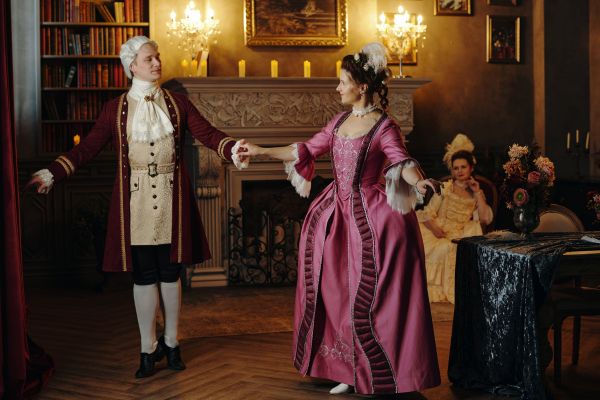
The baroque fashion era was never meant to whisper. It arrived with drama, confidence, and a deep love of visual impact. Clothes were not simply worn during this period; they were staged. Every ribbon, lace cuff, embroidered bodice, jeweled button, and sweeping skirt carried meaning. Fashion became a language of power, status, taste, and theatrical beauty.
Emerging across Europe during the 17th century, Baroque fashion reflected the larger artistic spirit of the age. Architecture grew grander, paintings became more emotional, music more expressive, and clothing followed the same mood. The body was dressed almost like a moving work of art. Rich fabrics caught candlelight. Silhouettes expanded. Details multiplied. Nothing felt accidental.
To understand the baroque fashion era, it helps to look beyond the surface glamour. Beneath the silk and pearls was a world shaped by courts, politics, wealth, gender roles, and the desire to be seen.
The Spirit of Baroque Style
Baroque style was built on movement, contrast, and emotion. In fashion, this meant clothing with volume, texture, shine, and decoration. The look was bold but not careless. It followed strict social codes, especially in royal courts, where clothing helped display rank and influence.
The word “excess” often comes up when describing Baroque fashion, and for good reason. This was an era of wide skirts, elaborate sleeves, layered garments, ornate embroidery, lace collars, pearl accessories, and luxurious fabrics. Yet excess was not only about vanity. It was also symbolic. To dress richly was to show wealth, stability, and closeness to power.
In a world without modern media, clothing was one of the clearest public signals a person could send. A noblewoman’s gown or a courtier’s coat could speak before the wearer said a word.
Women’s Fashion and the Art of Grandeur
Women’s clothing in the Baroque period celebrated structure and decoration. Gowns often featured fitted bodices, full skirts, and sleeves designed to draw attention to the arms and shoulders. The waist was shaped, though not always in the extreme way seen in later centuries. The overall impression was graceful but grand.
Rich materials played a central role. Silk, satin, velvet, brocade, and damask were favored by those who could afford them. These fabrics had weight and sheen, giving gowns a sense of presence. Embroidery, ribbons, metallic thread, lace, and pearls added further refinement.
Necklines changed through the century, sometimes sitting wide and low across the shoulders. Sleeves could be puffed, slashed, layered, or trimmed with lace. Skirts were not merely plain fabric falling to the floor; they were often arranged to show contrast between outer gowns and underskirts. The effect was deliberate, almost architectural.
There was beauty in the drama, but also restriction. These clothes required time, money, assistance, and careful behavior. A Baroque gown could make a woman look powerful, but it also reminded everyone of the social world she belonged to.
Men’s Fashion and Courtly Display
Men’s fashion during the Baroque era was just as expressive as women’s fashion, sometimes even more theatrical. The modern idea that men’s formalwear should be plain had not yet taken hold. In Baroque courts, men dressed with lace, silk, ribbons, embroidery, high heels, curled wigs, and decorative swords.
Early in the period, men often wore doublets, breeches, wide collars, and cloaks. As the century progressed, the justaucorps, a long fitted coat, became an important garment. It was worn with waistcoats and breeches, forming the early foundation of what would eventually become the modern three-piece suit.
Shirts were finished with lace cuffs and cravats, while shoes might feature bows or buckles. Stockings were visible and carefully chosen. Wigs became especially significant in the later Baroque period, particularly under the influence of the French court. A large, curled wig was not just a hairstyle. It was a symbol of status, elegance, and royal fashion authority.
For men, dressing well was part of social performance. A courtier needed elegance, polish, and control. Clothing helped create that image.
The Influence of Royal Courts
Royal courts were the fashion engines of the Baroque age. Among them, the French court under Louis XIV had enormous influence. Versailles was not only a palace; it was a stage where politics, etiquette, and style came together. Appearance mattered deeply, and fashion became part of court discipline.
Louis XIV understood the power of image. His court promoted luxury industries, including silk weaving, lace making, embroidery, and fine tailoring. French fashion became admired and copied across Europe. What the court wore influenced aristocrats far beyond France.
This connection between fashion and power is one of the most important features of the baroque fashion era. Clothes were not just personal choices. They were tied to national prestige, royal authority, and social ambition. Dressing according to court style could show loyalty, sophistication, and access.
At the same time, strict clothing codes helped maintain hierarchy. Not everyone could wear the same fabrics, colors, or ornaments. Fashion was beautiful, but it was also controlled.
Fabrics, Color, and Ornament
Baroque fashion loved richness in every sense. Fabrics were chosen for how they looked, moved, and reflected light. Velvet gave depth. Silk created shine. Brocade added pattern and texture. Lace softened edges and showed delicate craftsmanship.
Color was equally expressive. Deep reds, golds, blues, greens, blacks, creams, and metallic tones appeared in formal clothing. Dyes could be expensive, so color itself often signaled wealth. Gold and silver thread were especially associated with luxury and rank.
Ornamentation was everywhere, though it had to be balanced according to taste and status. Embroidered flowers, scrolling patterns, ribbons, bows, pearls, jewels, and lace trims added layers of meaning. These details showed not only wealth but also patience and skilled labor. A heavily decorated garment represented many hands, many hours, and considerable expense.
In Baroque fashion, decoration was not an afterthought. It was central to the identity of the garment.
Beauty, Hair, and Accessories
The Baroque look did not stop at clothing. Hair, makeup, and accessories completed the image. Women often wore curled or arranged hairstyles, sometimes decorated with pearls, ribbons, feathers, or jewels. Men’s wigs became increasingly elaborate, especially in formal court settings.
Fans were both practical and expressive. Gloves, muffs, jeweled pins, necklaces, and earrings added refinement. Swords, canes, hats, and buckled shoes helped shape men’s fashion. Accessories were carefully chosen because they contributed to the full visual message.
Beauty standards reflected the ideals of the time. Pale skin was often associated with status, suggesting a life away from outdoor labor. Cosmetics were used by both men and women in some elite circles, although attitudes varied. The finished appearance was meant to look controlled, elegant, and socially aware.
It may seem extravagant now, but in the Baroque world, presentation was part of identity.
Theatricality and Symbolism in Dress
One reason Baroque fashion remains so fascinating is its theatrical quality. Clothes created a sense of entrance. Wide silhouettes, shining fabrics, and dramatic accessories made people appear larger than life. This matched the wider culture of the era, where ceremony, performance, religion, and monarchy all used visual drama to create emotional impact.
Symbolism was woven into fashion. Lace could suggest refinement. Jewels could signal wealth or family status. Certain fabrics revealed rank. A formal coat or gown showed that the wearer understood social expectations. Even posture mattered, because the clothes demanded a particular way of standing, walking, and being observed.
The Baroque person did not simply get dressed and disappear into a crowd. At least among the elite, fashion was designed to be noticed.
How Baroque Fashion Still Influences Style
Although few people dress in full Baroque clothing today, the era’s influence has never completely disappeared. Modern fashion often returns to Baroque ideas when it wants drama. Designers still borrow from the period through brocade fabrics, corset-inspired bodices, lace cuffs, pearl details, embroidered coats, velvet suits, gold embellishment, and theatrical silhouettes.
Baroque-inspired fashion appears in formalwear, costume design, runway collections, bridal styling, and editorial photography. Its appeal lies in its richness. It gives clothing a sense of history and emotion, something more layered than everyday minimalism.
Even a velvet blazer, a pearl-trimmed dress, or an ornate embroidered jacket can carry a faint echo of the Baroque mood. The style reminds us that fashion does not always need to be quiet to be elegant.
Conclusion
The baroque fashion era was a world of silk, velvet, lace, ribbons, jewels, and carefully managed spectacle. It celebrated abundance, but that abundance had meaning. Clothing expressed rank, wealth, taste, gender, politics, and connection to courtly power. It was beautiful, yes, but it was also deeply social.
What makes Baroque fashion so memorable is the way it turned dress into drama. Every detail seemed to ask for attention, from the sweep of a gown to the curl of a wig or the shimmer of embroidered thread. It was fashion as performance, fashion as status, and fashion as art.
Looking back now, the era may feel distant, even extravagant beyond ordinary life. Yet its influence still lingers wherever clothing becomes bold, decorative, emotional, and grand. Baroque fashion reminds us that style has always been more than fabric. Sometimes, it is a whole world stitched into shape.
